BSILS provides general information to help people understand the systems involved in mobility, accessibility, and post-accident care. This is not legal, medical, financial, or insurance advice for your specific situation. For decisions about your case, please consult an attorney, your healthcare provider, your insurance company, or a qualified benefits advocate. We can refer you to local resources if you don't know where to start.
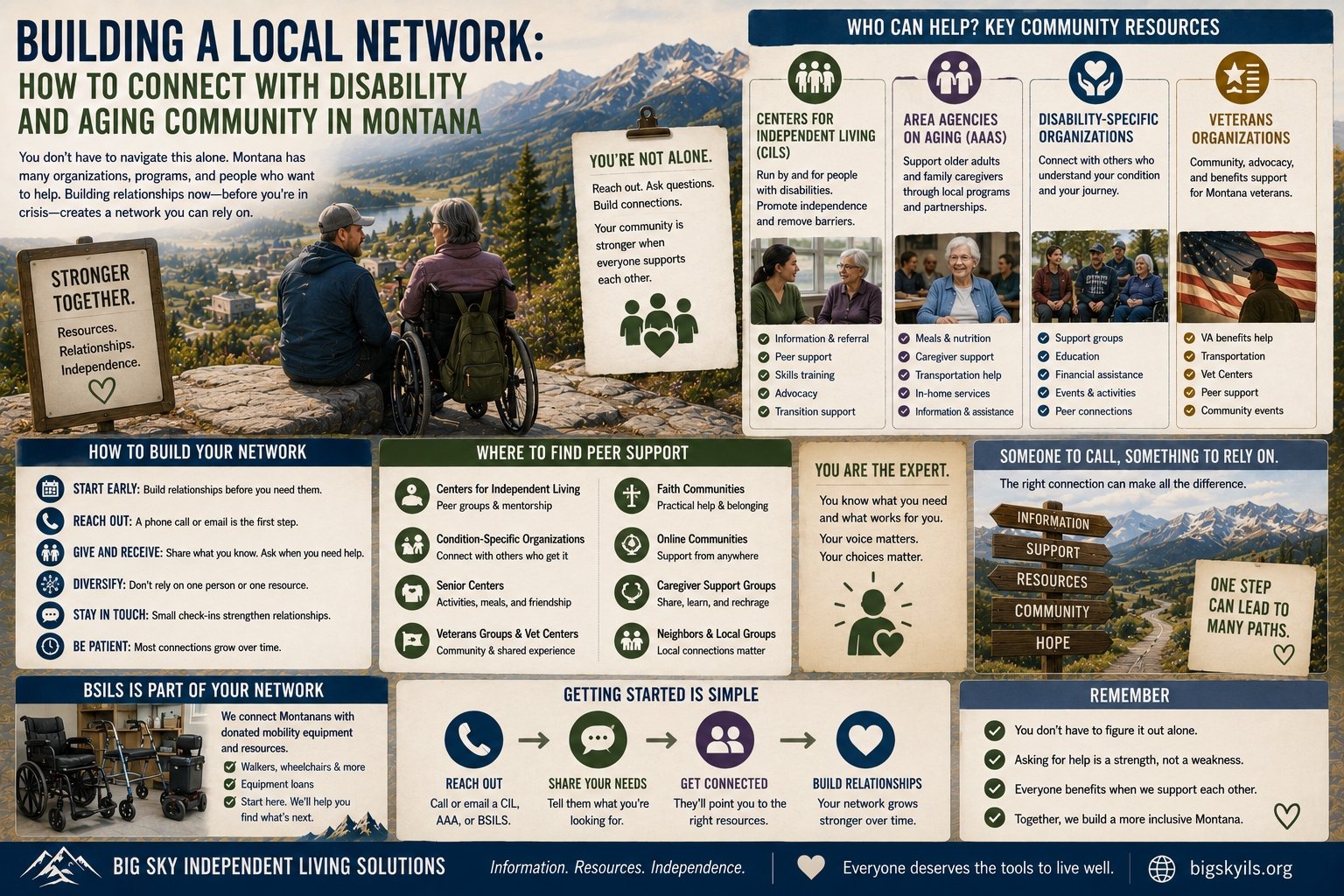
Building a Local Network: How to Connect with Disability and Aging Community in Montana
Most people navigating disability or aging-related change don't realize how many Montana resources are out there until much later than they could have. Here's a map of the major ones — CILs, AAAs, disability-specific organizations — and how to start.
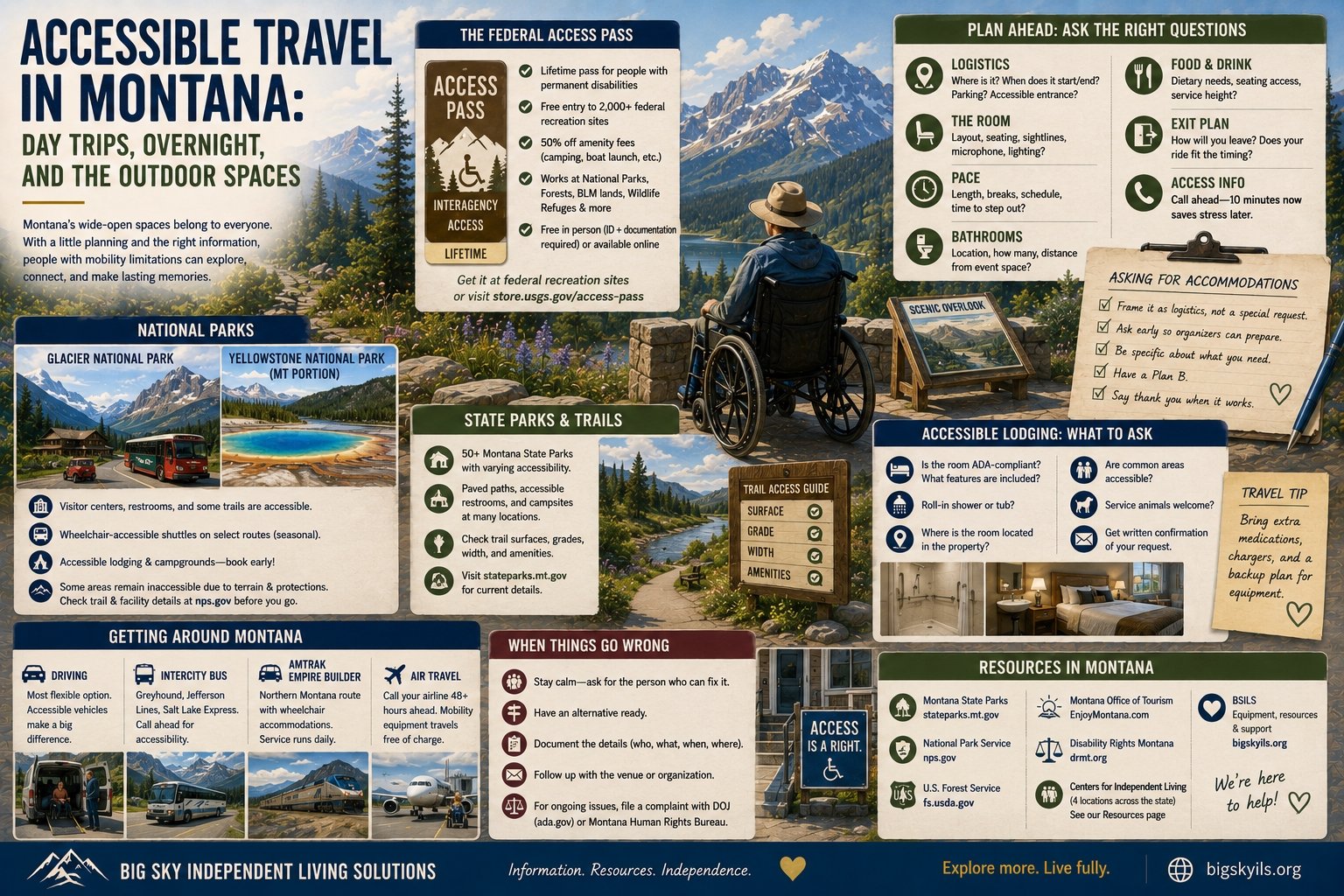
Accessible Travel in Montana: Day Trips, Overnight, and the Outdoor Spaces
The federal Access Pass is the most useful single document many Montanans don't know about. Here's how it works, what's accessible in Glacier and Yellowstone, and the practical questions to ask before booking lodging.
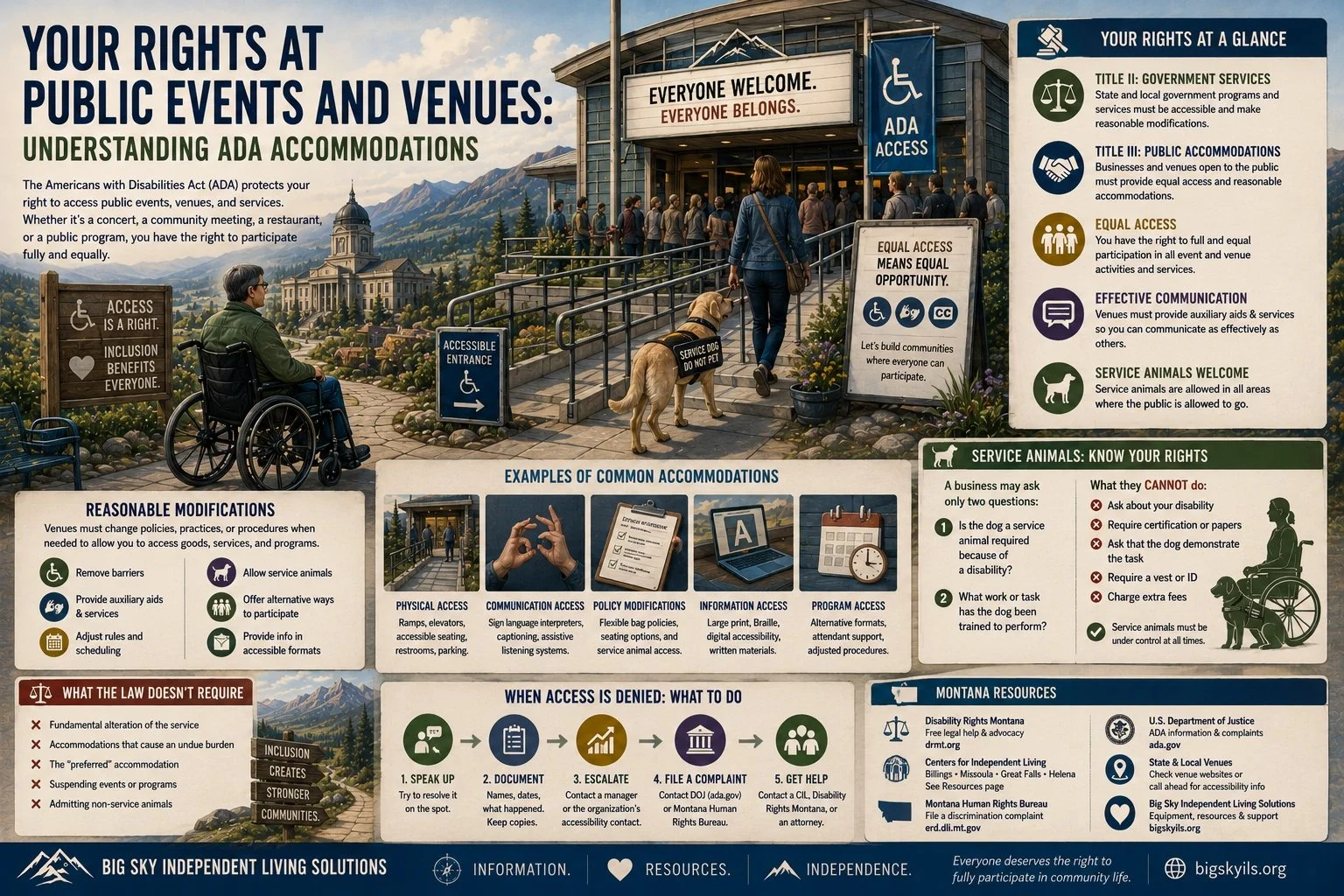
Your Rights at Public Events and Venues: Understanding ADA Accommodations
The ADA's been federal law for thirty-five years, but most people only learn what it requires when they need it. Here's the framework: what venues must do, what they don't, and what to do when access is denied.
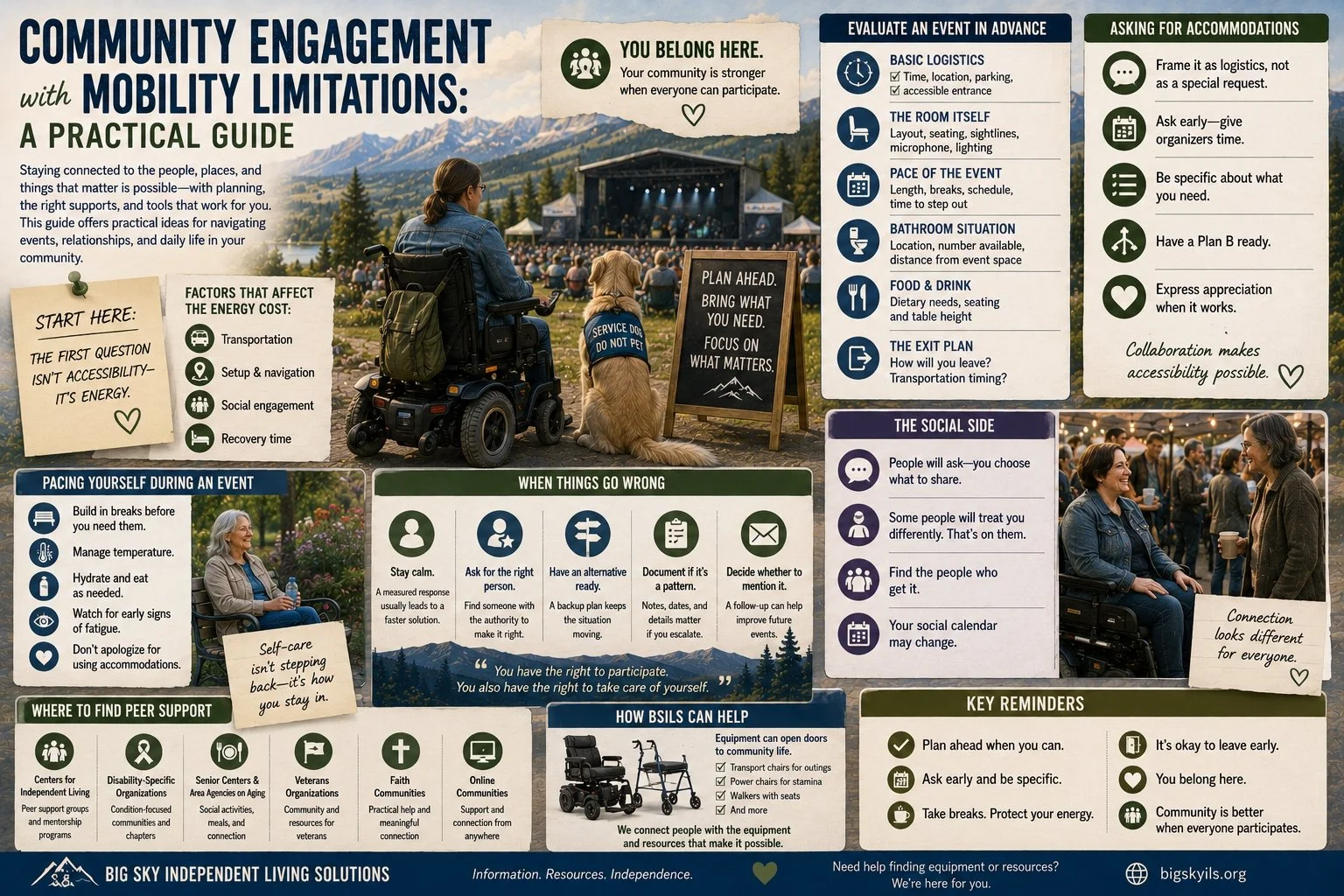
Community Engagement with Mobility Limitations: A Practical Guide
The biggest barrier to community engagement often isn't physical access — it's energy. Here's how to evaluate events in advance, ask for accommodations gracefully, and pace yourself through the day.
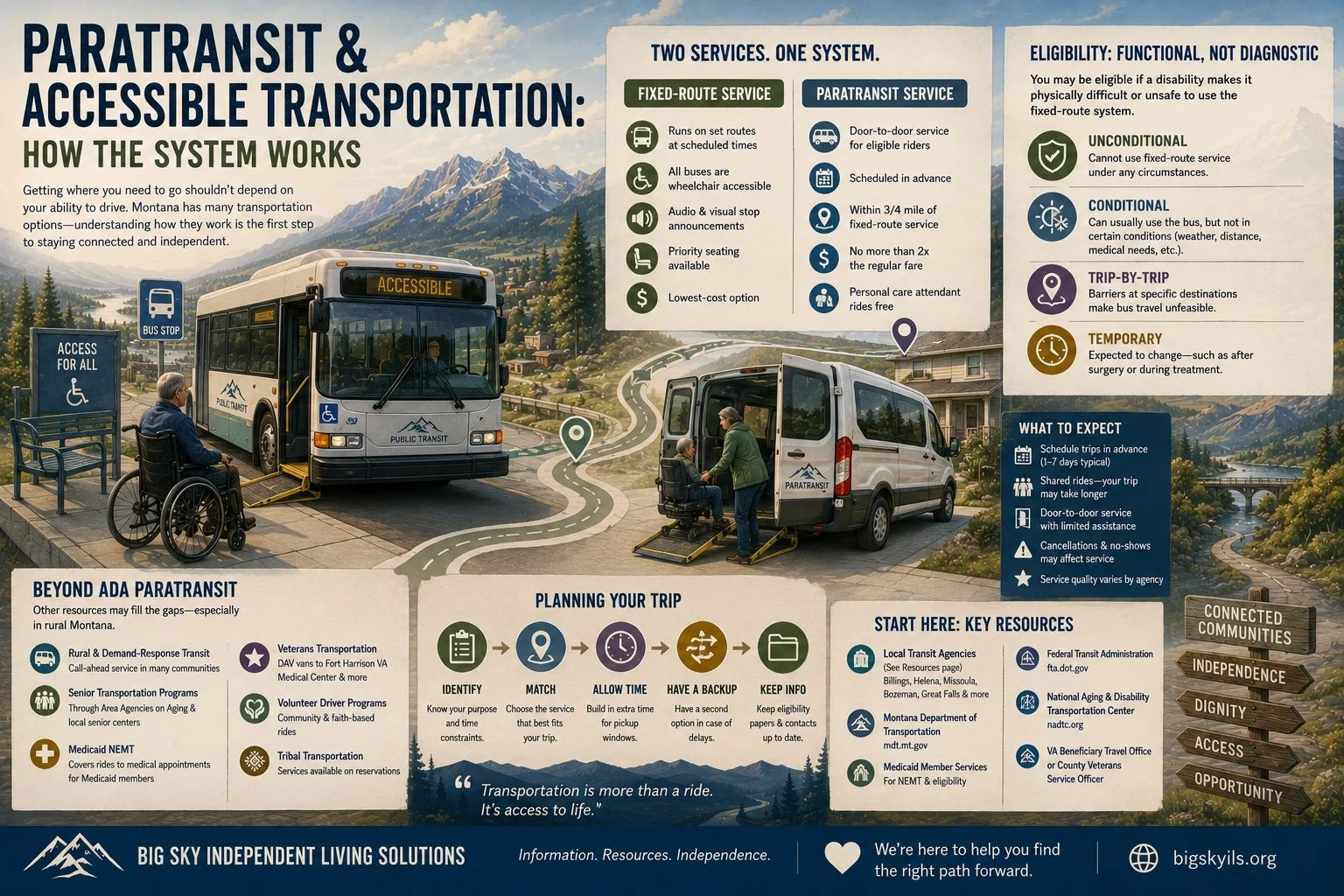
Paratransit and Accessible Transportation: How the System Works
Getting somewhere is the first community-access question — and Montana has several systems that don't quite cover everyone. Here's how ADA paratransit works, what fills the rural gaps, and where to start.
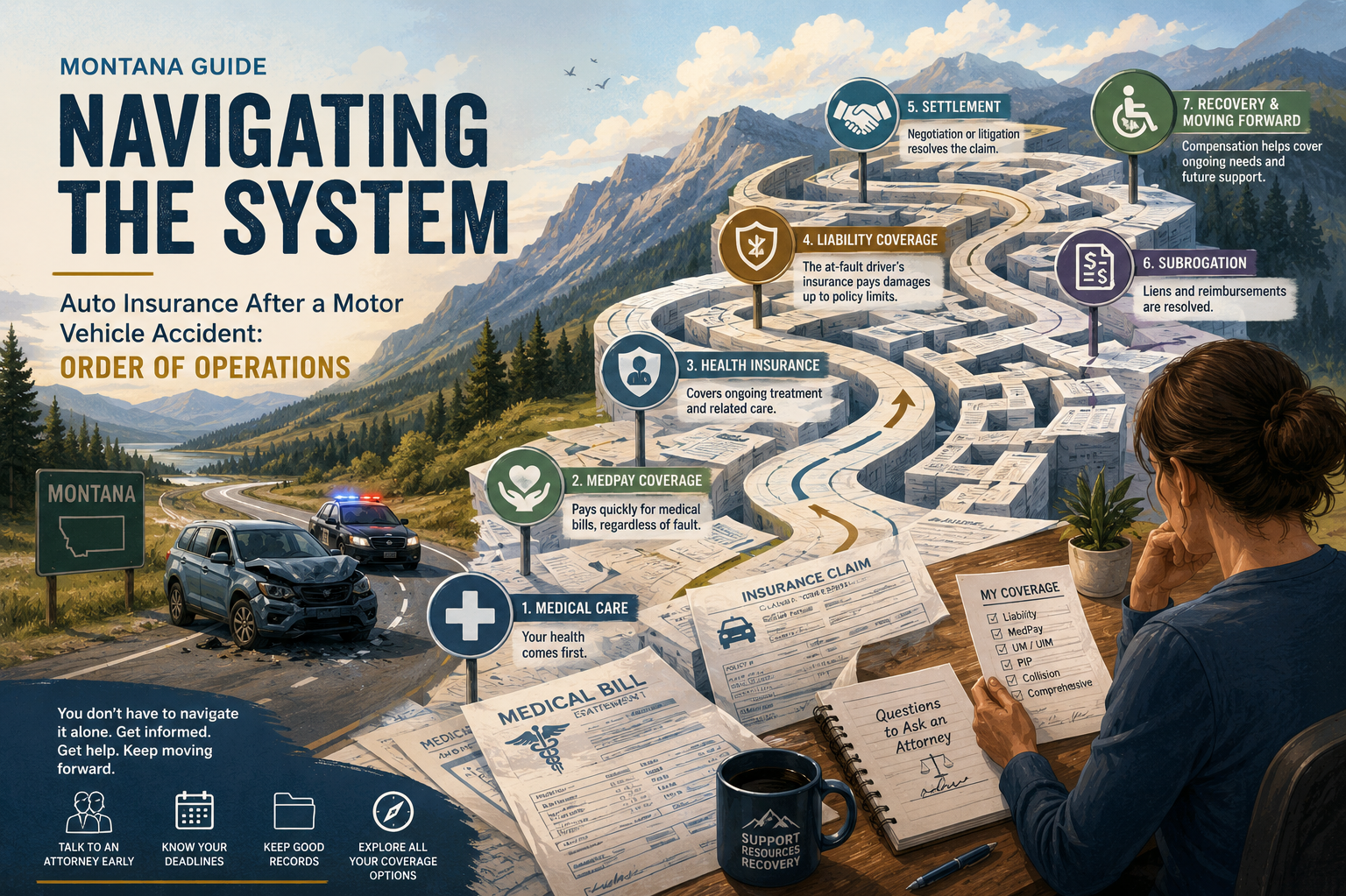
Auto Insurance After a Motor Vehicle Accident in Montana: Order of Operations
Montana is an at-fault state, and the insurance choices made in the first weeks after an accident affect everything that follows. Here's the order of operations — and when to talk to an attorney.
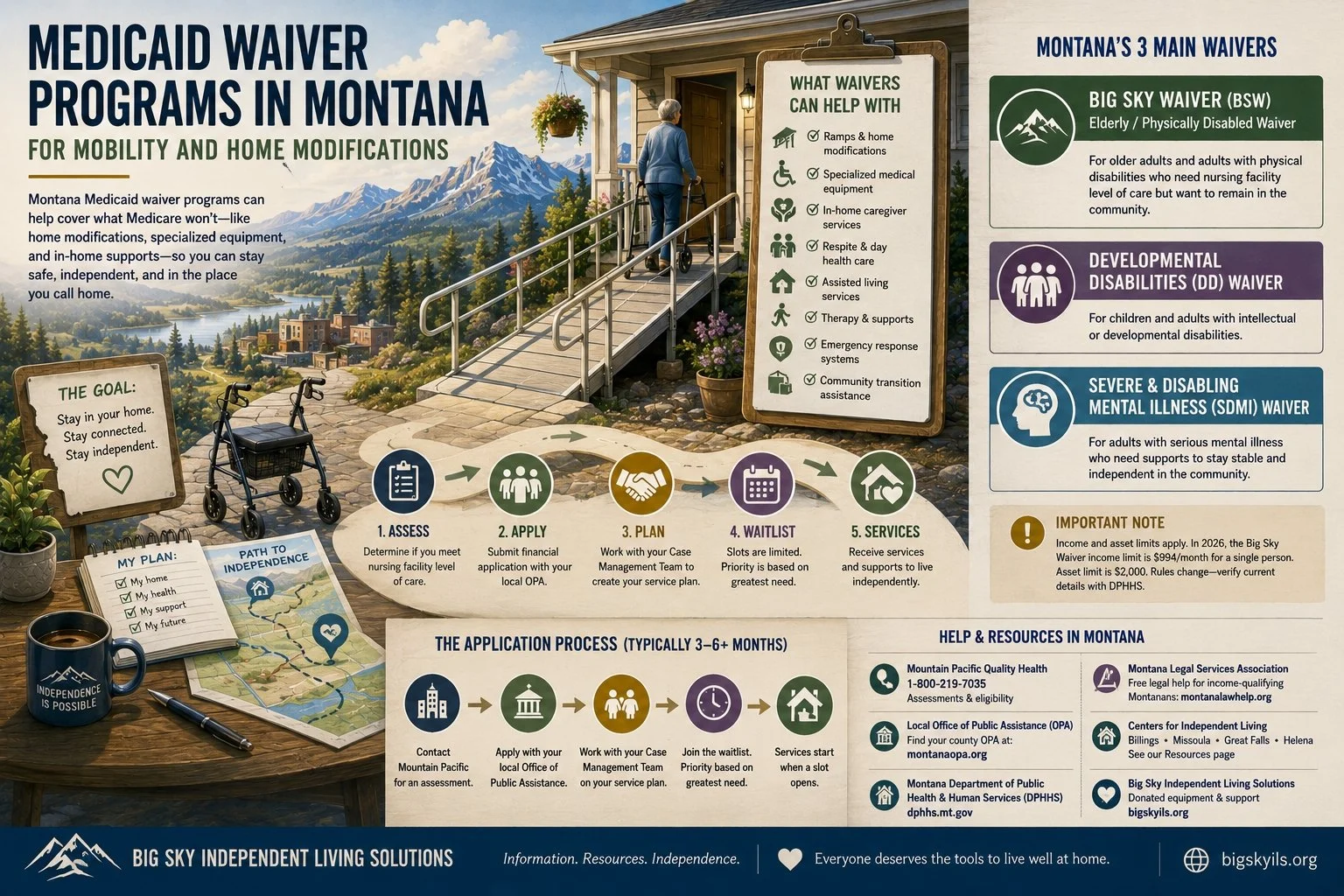
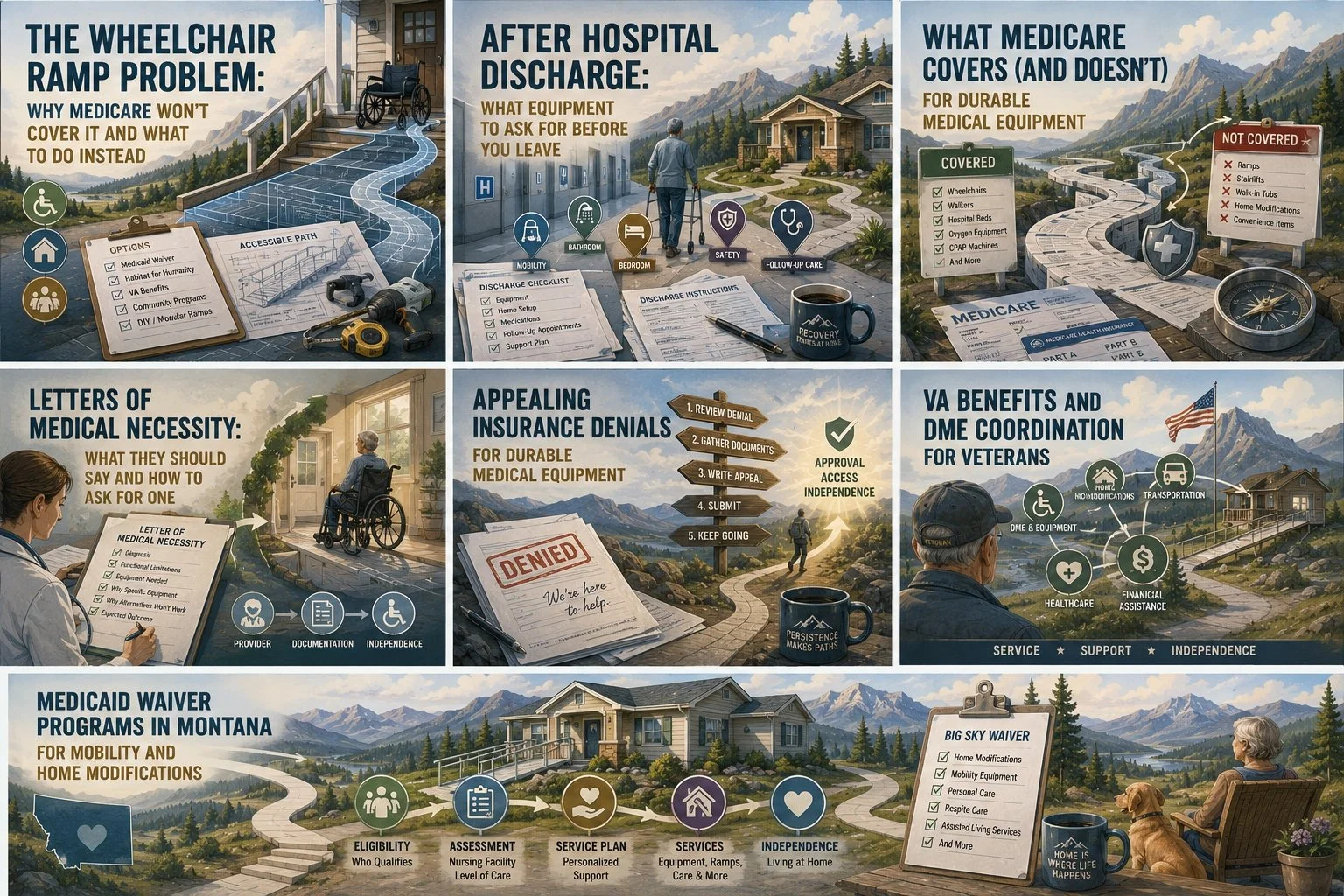
Medicaid Waiver Programs in Montana for Mobility and Home Modifications
Montana's Medicaid waivers can cover home modifications and equipment that other programs won't. Here's how the Big Sky Waiver and related programs work, and how to apply.
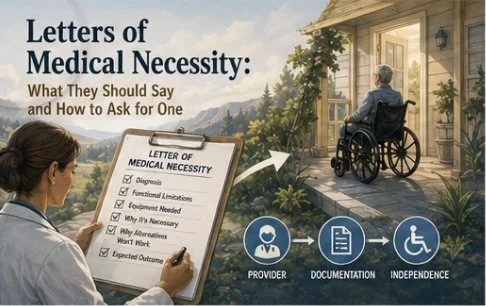
Letters of Medical Necessity: What They Should Say and How to Ask for One
A well-written letter of medical necessity is often the difference between approval and denial. Here's what one should say, and how to ask a provider for the version you need.
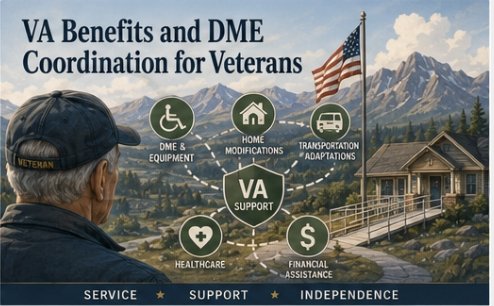
VA Benefits and DME Coordination for Veterans
VA equipment benefits work differently from Medicare and Medicaid. Here's how the VA covers durable medical equipment, home modifications, and the resources Montana veterans should know about.
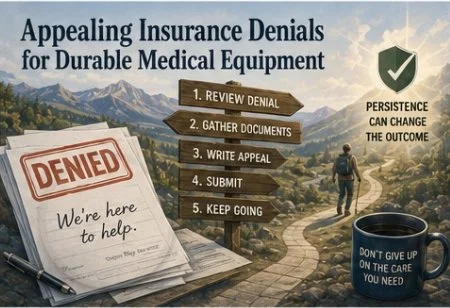
Appealing Insurance Denials for Durable Medical Equipment
Most insurance denials can be appealed, and most successful appeals follow the same pattern. Here's the process, step by step, with the deadlines you can't afford to miss.
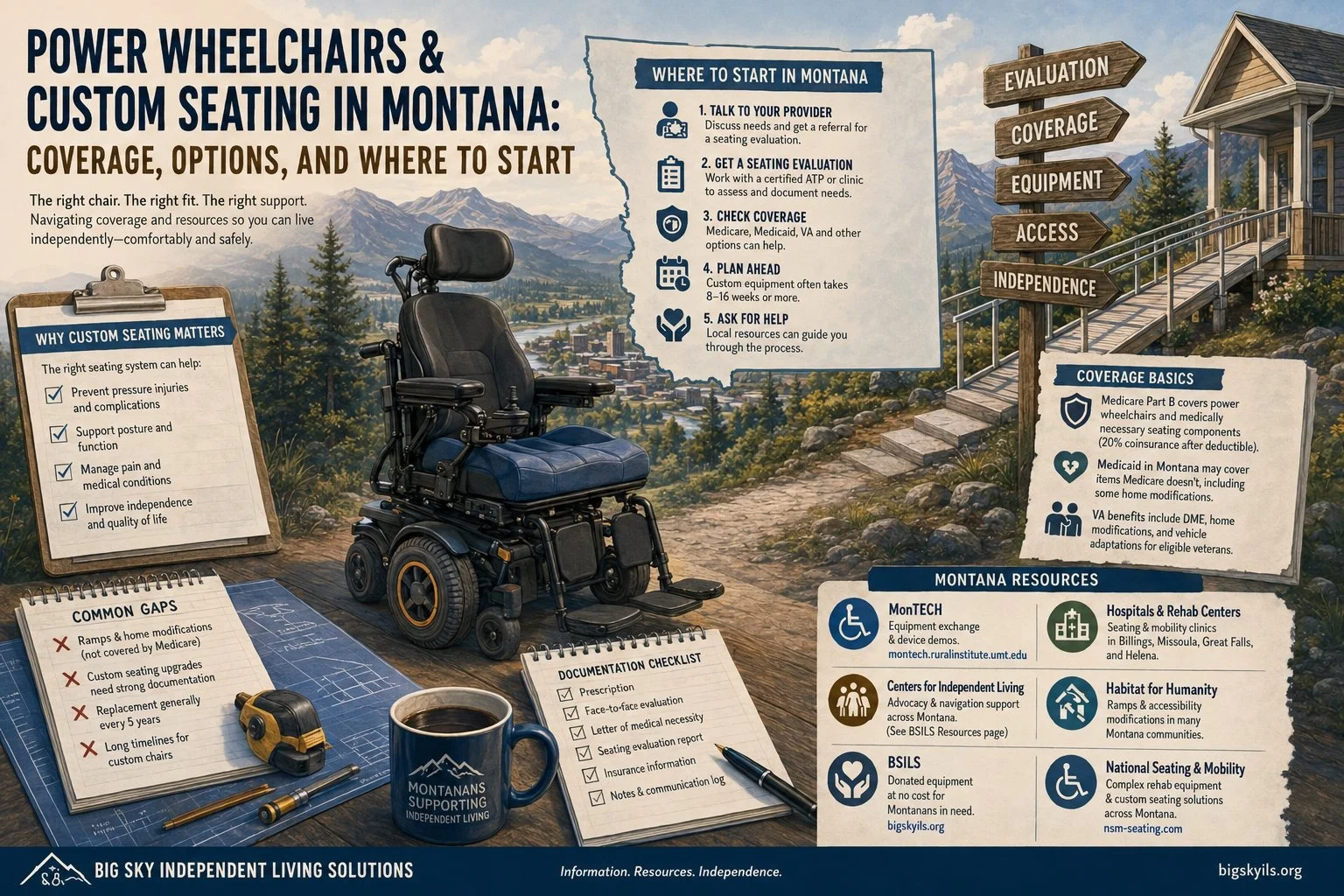
Power Wheelchairs and Custom Seating in Montana: Coverage, Options, and Where to Start
Power wheelchairs and custom seating are among the most complex equipment to obtain. Here's how Medicare, Medicaid, and Montana resources work together — and where BSILS sometimes fills the gaps.
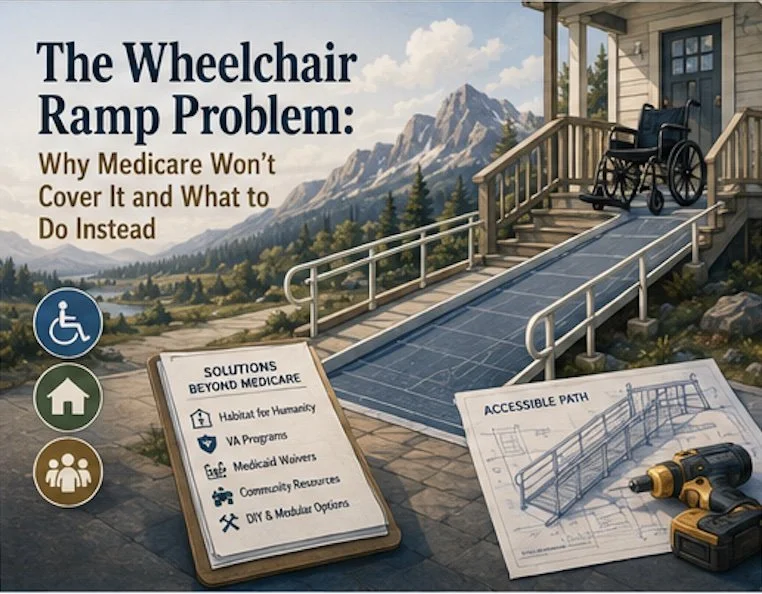
The Wheelchair Ramp Problem: Why Medicare Won’t Cover It and What to Do Instead
Medicare doesn't cover ramps, and the gap is one of the most common barriers Montana families face. Here's why the system works the way it does and what alternatives exist.
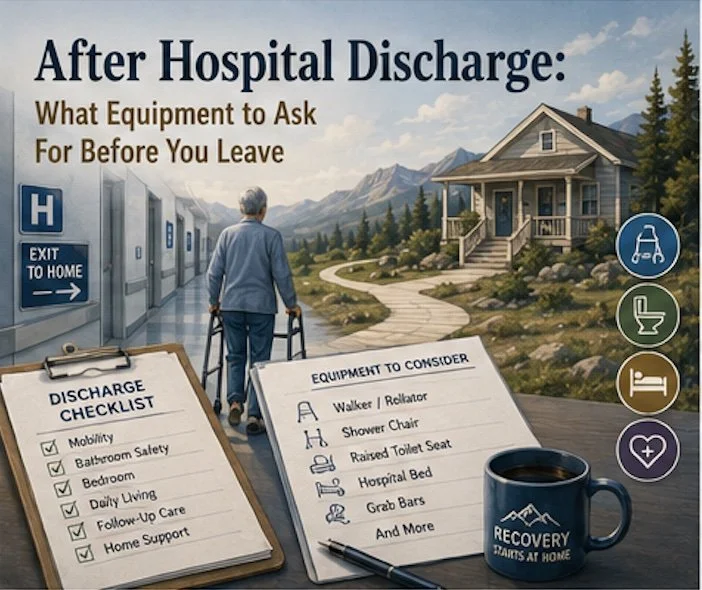
After Hospital Discharge: What Equipment to AskFor Before You Leave
The hours before discharge are when the equipment decisions get made. Here's what to ask for, who to ask, and why the timing matters more than most families realize.
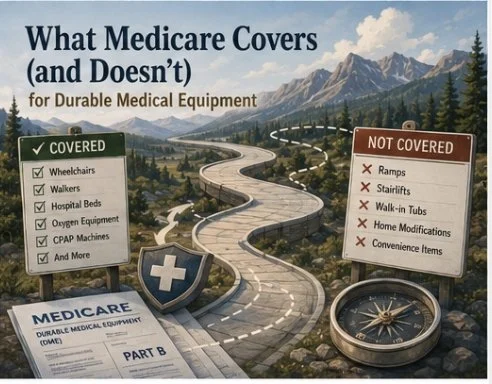
What Medicare Covers (and Doesn’t) for DurableMedical Equipment
Medicare's durable medical equipment coverage has clearer rules than most people realize — and predictable gaps. Here's how the system works and where to look when it doesn't cover what you need.
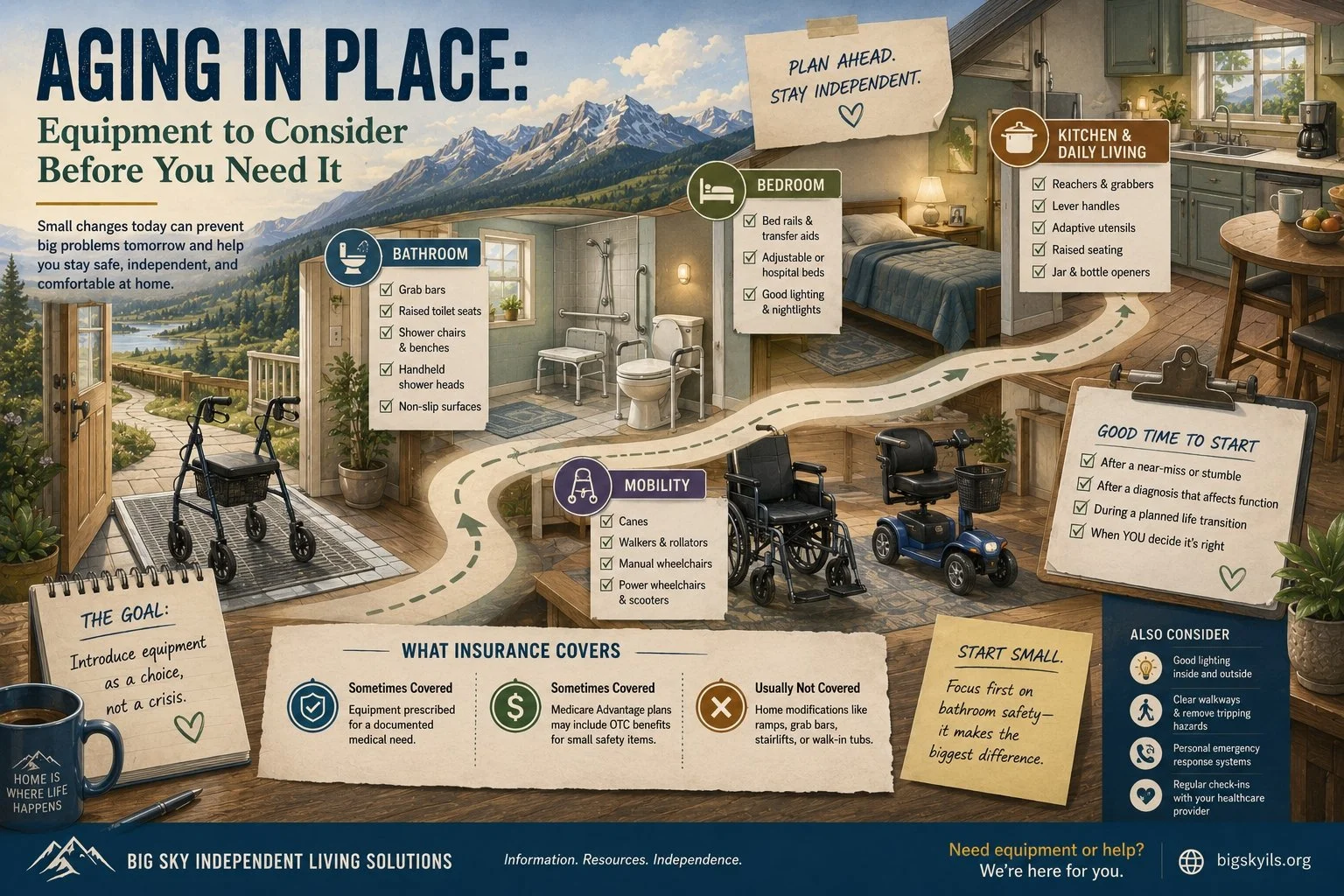
Aging in Place: Equipment to Consider Before YouNeed It
Aging in place works best when the equipment is in place before it's urgently needed. Here's what to consider, room by room, with Montana-specific resources.